
What Happened after Khamenei DIed?
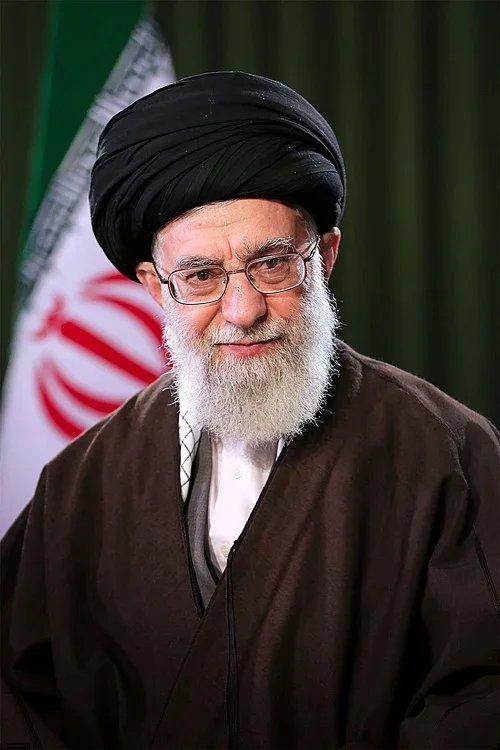
Ali Khamenei, the leader of Iran, was killed in an Israeli attack on February 28. The attack was part of the United States’ and Israel’s strategy: decapitate the Iranian government. I don’t wish to comment on the morality of the attack, or the strategy behind it. Instead, I have been thinking about Khamenei, the person.
From what I have read, Khamenei at young age devoted himself to studying the Quran and the theology of Islam. A protégé of Ayatollah Khomeini, he was part of the movement to establish a theocracy in Iran. He succeeded Khomeini as the leader of Iran and has been known for his hardline policies and his desire for Iran to become a nuclear power.
Both Islam and Christianity agree that when a person dies, they appear before God. Furthermore, both Islam and Christianity agree that whatever happens to that person in eternity will be determined by the will of God.
Beyond these two points of agreement, Islam and Christianity diverge. It is false to say all religions lead to the same God or the same place. From what I understand of Islam, devout Muslims, as well as others who do righteous works, are treated with mercy by Allah and are welcomed into a type of heaven. The unrighteous are condemned to punishment.
Was Khamenei a righteous person according to the teachings of Islam? His record would be mixed. He most likely accomplished the Five Pillars: faith, prayer, almsgiving, fasting, and pilgrimage. As a cleric he probably lived by the teachings of Muhammed. But he also brutally crushed oppression, persecuted his own people, and held onto political power at all costs.
Of course, I am more familiar with Christian teachings. Followers of Jesus believe we do not gain entrance to heaven based on good works, but rather by the grace of God (“It is by grace you are saved, not works, lest any man should boast…”). This grace comes through Jesus who died for our sins and rose from the dead to prove his power over death and sin.
A clear teaching of Jesus, which troubles many people, is he is the only path to our Heavenly Father (“No one comes to Father except through me…”). This exclusivity claim seems narrow. Without trying to answer every objection, I can see God’s reasoning. First, out of his mercy, he has made a way for our sins to be forgiven and for us to have a relationship with him. He did not have to do this; he did it because at the heart of his character there is deep love for all he created.
Second, if God forced a relationship upon people, the elimination of choice would be at best coercive, and at worst, God exerting his overwhelming presence to control us. Imagine this scenario: you are forced by an unjust king to wear a leash and sit by his throne. You must laugh at his jokes, attend to his needs, and live in fear of his changing moods. This was the core idea of many ancient religions. Judaism and Christianity changed that teaching. God is consistently portrayed as one who offers a choice: enter into relationship with him or not.
Finally, Christianity recognizes no amount of righteous works can balance the scales with sinfulness of our hearts. As I grow older, I am amazed to discover how bent my heart is to evil. This despite prayer, learning, and asking God to change to my heart. I depend on God’s grace because I know cannot fill the gap between my unrighteousness and God’s righteousness.
Only God can know the true condition of a person’s heart. But Jesus also said, “By their fruits you will know them…” Did Khamenei show the fruit of the Spirit? Did he show love, joy, peace, patience, kindness, goodness, gentleness, faithfulness, and self-control? From what I know, he was lacking in several of these fruits.
I believe in hell because Jesus spoke about it. I believe Dallas Willard best described hell as “the best God can do for some people.” When people reject the way of Jesus, God makes a place for them. It is a miserable place, but a place people choose to be because they do not want to meet God on God’s terms.
Is Khamenei in hell? The evidence points in that direction. He did not proclaim Jesus as his leader, he did not show the fruit of the Spirit, and he did not follow the teachings of Jesus above the teachings of Muhammed. I do not think Khamenei might be in hell because he hated America, but because he rejected Jesus.
Imagine his surprise when he found out his whole life, belief system, life goals, and values were wrong. Maybe his first reaction was shock and surprise.
Paul, the apostle, experienced a similar shock, but he had not yet died. When he met Jesus on the road to Damascus, he found out his whole life, belief system, life goals, and values were wrong. He faced a choice: defiantly continue in his belief or humble himself before Jesus and learn a new way. That switch can be harder than you think.
The real question, of course, isn’t about Khamenei. The real question is about you. We cannot say to Jesus, “Lord, Lord,” unless we humble ourselves, ask for forgiveness, receive his grace, and begin to live according to his teachings. Jesus said, “If you love me, you will keep my commandments.” That would mean we would love God and love each other, our neighbors, and our enemies as he does.
I refuse to rejoice in anyone’s death that appears to be headed to hell. I think it must break God’s heart. But it is a reminder not to be cocky about my own salvation. It is a great gift. And it can be your great gift as well.