W. Clay Smith

  • Home
  • About
  • Help for Pastor Search Teams
  • Consulting
  • Resources
  • Contact
  • W. Clay Smith Blog

Soaps…

January 22, 2021 by Clay Smith

I often stayed with my Aunt Neta when I was little.  Every afternoon all activity stopped, so she could watch her Soap Operas.  They were not quite so trashy in those days, although they were still filled with drama.   People would fall in love with someone else’s spouse, or they would be caught stealing money.  They seemed to get strange diseases, where they were close to death, but they looked really good in a hospital gown.  To me, they were boring as all get out.  Filled with organ music tremolo, you knew a commercial was coming when the music swelled.   

“Dallas” was the first soap opera that made it to prime-time.  My ultra-macho cousins, Kelly, Steve, and Ned never missed an episode.  I watched it some, but had trouble keeping up with what was a dream and what was supposed to be happening in real life.   

I have been forced at times to watch “The Bachelor” and “The Bachelorette.”  To me, these shows seem a lot like the soap operas Aunt Neta used to watch.  They simply are a little trashier and show more than I am comfortable with.  I’ve always wondered why anyone would say, “I just love him so much,” when he’s off kissing some other girl.   

To me, it seems like life has enough drama without adding more, particularly if you do what I do for a living.  Scarcely a week goes by that I don’t hear about a marriage that’s on the rocks.  Sometimes he cheated.  Sometimes she cheated. Sometimes one of them has an addiction.  Sometimes nobody cheated, but the stress of life drove a wedge in the relationship.  When these folks come to see me, they are in crisis.  The tears are real, the emotional pain intense.  Why would I need to watch somebody try to act out what I see in my office? 

These shows always seem to feature a hospital element.  I’ve spent more than my fair share of time in hospitals.  Real sick people don’t look as pretty as they do on the soaps.  Tubes are sticking in all seven body openings (go ahead and count, I’ll wait) and it looks like an electrician walked out in the middle of a wiring job.  The emotion is real, the fear can be thick.  If you want drama, go on the oncology ward where people are praying chemo works and the tumor is shrinking.  Or try ICU, where people are comatose, and the prognosis is grim.   

On the soaps, there always seemed to some betrayal.  As a pastor, I’ve walked with people through the real thing.  A business partner walks out with hundreds of thousands of dollars.  A father abandons his child.  A child runs away and vows never to return.  I’ve heard every one of these stories. 

Every soap has a villain, someone who is an arrogant know-it-all.  I deal with that all the time.  Somebody read something on a website (they couldn’t put it on the internet if it wasn’t true) and they want to correct some point of my sermon.  Or somebody doesn’t like something that is happening at church and they pitch what my grandmother used to call a “hissy fit.”  Why would I want to watch a show that is just like my daily life? 

I’m writing this in a truck-stop.  I’m on a deadline and this was the first place I could find with an internet connection.  A TV above my head is blaring out a soap opera.  I’m not a drama critic, but I’ve seen better acting in middle school adaptations of Shakespeare.  The show keeps jumping story lines.  So far a woman has tried to seduce an old boyfriend who is apparently having a relationship with an older woman; a man has just found out he may have a daughter with an old lover; and a set of parents was rushing to the hospital to be by their daughter’s bedside. This is what I can pick up without watching, but I’m getting a headache trying to keep up. 

If you have real life drama, God is there for you.  He may not make the drama disappear, but he will walk through the drama with you.  Never forget he will give you strength, wisdom, and grace to move through your drama.   

One older woman knew this, but mis-applied it.  She went to Mid-week Prayer Meeting and shared a serious prayer request: “Rhonda has been in a accident and is in a coma.  The doctors don’t know what to do and her family is fighting amongst themselves.  Please, let’s all pray for Rhonda, for her family, and for the doctors.”  The pastor was moved by this unfolding tragedy, and asked the woman which hospital Rhonda was in, intending to visit this poor soul and her troubled family. The woman blinked and said, “I don’t know.  They didn’t say.  But I will tune into “Days of our Lives” tomorrow and let you know.”

January 22, 2021 /Clay Smith
soap operas, drama
mob-01.jpg

Jesus and the Mobs…

January 15, 2021 by Clay Smith in Jesus and Today's News

Jesus had to deal with mobs of people frequently. 

When Jesus went back to his hometown, everybody crowded into the synagogue to hear him.  They had heard about his healing and teaching in Capernaum and wanted him to do something spectacular in their town.  But Jesus was more in a preaching mood that day and reminded them that God did not do miracles on demand to satisfy a crowd.  Then he got radical and reminded them God sometimes favored foreigners over his own people.  The crowd turned into a murderous mob in a hurry.  They drove him out of town, took him to a cliff and meant to throw him over it.  Luke cryptically tells us, “But he walked right through the crowd and went on his way.”  How did he do that?  He would not let the mob sin by murdering him. 

When Jesus cleared out the Temple of moneychangers and livestock salesman, people admired his boldness.  They saw his miracles.  The crowd kept coming back for more.  But Jesus did not trust the crowds.  He knew what was in human beings: a sinful selfishness that demands; a self-righteousness that refuses to see truth; and a resistance to submission to the will of God.  He knew every crowd is just a few steps from a mob. 

Once when Jesus was teaching a large crowd (5,000 men plus women and children), it grew late and stomachs were rumbling.  He told the disciples to plan a meal, and they told him they only had five loaves and two fish.  Jesus miraculously stretched that to feed everyone present and there were leftovers a plenty.  But the crowd turned into a mob.  They decided to make him King, whether he wanted to be a King or not.  It’s easy to see why they wanted him to be their King: food they didn’t have to work for and miracles for all.  Jesus escaped the mob and went to the mountains to pray.  Prayer was more important than the mob agenda. 

As Jesus’ popularity grew, mobs became a way of life.  A mob kept Zacchaeus from seeing Jesus, so he climbed a sycamore tree.  Jesus saw him and invited himself over for dinner at Zacchaeus’ place.  The woman with the bleeding issue fought her way through the mob to touch the hem of his garment.  She wanted to be healed and she was.  The mob told blind Bartimaeus to stop his cries for mercy, Jesus was too busy for him.  Instead, Jesus stopped, told him to come over, and he healed him.  Each time the crowd tries to shush the individual, Jesus seeks out the one and meets their need. 

In the last week of Jesus’ life, it was a mob that came to the garden to arrest him.  It was a mob that cried out to Pilate, “Crucify him.”  It was a mob that stood around his cross, waiting to see if God would rescue him.  All of these mobs had been orchestrated by leaders intent on discrediting Jesus, manipulating public opinion, and making sure their power stayed intact.   

When I think about Jesus and mobs, I realize he never participated in a mob agenda, he never trusted a mob with his mission, and he never incited people to violence.  Never.  Not once.  The mobs Jesus met were not pursuing his mission; they were trying to force their mission onto him.  Jesus understood there is no such thing as a righteous mob.   

If Jesus had been at the Capitol Building when the mob attacked, what would he have done?  Would he have tried to teach them?  Would he have moved through the crowd doing miracles?  I know for certain he would not have broken windows, assaulted police officers, nor posed for a selfie.   

I don’t know for sure what Jesus would have done.  Maybe he would have wept.  Maybe he would have said, “All they like sheep have gone astray.”  Maybe he would have left the mob and gone to pray. 

I do know for sure what Jesus did for the mob that stormed the Capitol.  He died for them.  He gave his life so their sins – all of them – could be forgiven.  He rose from the dead to give them a power greater than the power of the mob, the power of God flowing in their lives.   

Stop and consider the wideness of his grace.  Jesus loves everyone who was at the Capitol that day.  He loves the people of the mob, the Congressmen (Republicans and Democrats), and the Capitol police.  He wants good for them all. 

If you are a Jesus follower, truly a Jesus follower, then you must take seriously his words: “By this shall all men know you are my disciples: That you love one another as I have loved you.”  Was there anybody on Capitol Hill that you need to love as Jesus loves them?

January 15, 2021 /Clay Smith
mob, Capitol building, Jesus
Jesus and Today's News
Truth and Reality-01.jpg

Truth and Reality…

January 08, 2021 by Clay Smith in Following Jesus

My mother had a simple way of teaching me the value of the truth.  If she caught me lying, she spanked me.  In those days, it was assumed children had enough padding on their bottoms to enable truth
reinforcement.  Telling what really happened was important. 

Truth was conveyed in simple ways: touch a hot stove and you will get burned (I did, and I was); stick a fork in an electrical socket and you will be shocked (I did, and I was); and slow your horse down before you turn for the barn or he will run away with you (I didn’t, and he did).  There was a “cause and effect” quality to the truth.   

Some things we just knew: what goes up must come down; the sun rose in the east over the Old Grove and set in the west over the Estate Grove; and we had a full moon every twenty-eight days. 

It wasn’t until I took my first Philosophy course in college that I learned defining “truth” was necessary.  I read Plato, Aristotle, Thomas Aquinas, and Kant.  To me, it seemed like they used a lot of words to explain things we just knew.  Along the way, I was introduced to Hegel and Marx, who declared truth was a social construct.  In other words, truth was whatever the majority said it was.  To my rurally educated mind, that was nonsense.  If the majority of people thought a ball fell up, it would still fall down.  Truth is not what the majority decides; it is what is real. 

In Western culture a popular philosophy has risen claiming truth is what you want it to be.  That’s why you hear people saying, “This is my truth.”  What they are really saying is, “This is my opinion, or my preferred version of reality.” 

There is something appealing about getting to make your own version of reality.  It means you get to make your own rules.  It means you get to decide right and wrong.  This, of course, can have disastrous consequences.  You leave your parent’s home, and you decide you get to make the rules.  You decide your truth allows you to sleep with as many people as you want, and it will be okay.  After all, the sitcoms show you a reality that says people are okay with multiple partners.  But -news flash – sitcoms aren’t real.  Just because it is on TV (or Social Media), doesn’t mean it is real.  You discover there is emotional pain, soul pain.  Why?  The reality is physical intimacy has soul consequences.  That is the truth, validated by the reality of millions of people through centuries of human history. 

I remember in High School seeing the play “1984.”  George Orwell was warning us of accepting something as true just because it is repeated over and over.  Two plus two is never five.  Just because CNN or Fox News repeats something, doesn’t mean it is true.  Truth is harder to find in our culture these days.   

Sometimes the truth works for us; sometimes it works against us.  If the truth doesn’t make you uncomfortable at times, it probably isn’t the truth.  Maturity is what happens when you accept truth is a reality you cannot move by your own willpower. 

Followers of Jesus understand something deeper about truth.  Jesus made a bold claim: “I am the way, the truth, and the life.”  Jesus declared ultimate truth is not found in a philosopher’s book or a media report; ultimate truth is found in him.  Truth is a person.  Jesus is the definer of reality.  When you know him, when you experience life with him, your outlook on the world is different.  Jesus brings reality into focus. 

In John’s gospel, Jesus also says, “And you shall know the truth and the truth shall set you free.”  There is freedom in knowing reality.  You stop fighting to make your own truth.  You accept realities of the way things are.  You follow Jesus closely so he can lead you in the way of truth.   

I’ve noticed that people who keep trying to make their own truth live stressful lives.  It takes a lot of energy to manufacture a version of reality.  There is a much smaller subset of people who find great peace in life, who let Jesus be their truth.  These people have a centeredness, “a peace that passes all understanding.”  

Two types of people: stressed creators of their own realities or people who accept Jesus as the truth.  Which person are you? 

January 08, 2021 /Clay Smith
Truth, Reality, Stress
Following Jesus
Clay 2020 in rearview-01.jpg

2020 in the Rearview Mirror…

January 01, 2021 by Clay Smith in Reflections

I read an article today that said 2020 has not been the most stressful year in history.  I buy that.  The years of the Black Plague were worse.  Any year of the Civil War was no picnic.  Still, this year has had it’s moments. 

It’s hard to remember the year began with President Trump being acquitted of an impeachable offense by the Senate.  It looked like the election would be the big news of 2020.   

I flew to San Diego for a conference at the beginning of March.  The plane was packed; we’d never heard of “social distance.”  Corona was just starting to be a thing.  I haven’t been on a plane since. 

A week after I got back, orders went out to shut down stores, restaurants, and gatherings.  Churches stopped meeting in person.  One meme I saw captured it perfectly: “Just like that, all preachers became TV evangelists.”  I learned to preach to a camera instead of a congregation.   

When we first went to lockdown, I remember how people wanted to get outside and walk, just to see other people.  I did meetings by ZOOM.  At my house, thankfully, we never ran out of toilet paper, but there were a couple of times we were down to our last two rolls.  We cooked at home every night for a month – it had been a long time since we did that.         

I made lots of phone calls to check on members of our church – over 300.  Other staff members called through the membership and attendees.  We prepared a “doomsday budget” in case giving dropped by 50%.  I remember the panic and uncertainty of those days.   

About the same time COVID began, my sister was diagnosed with cancer.  It was serious.  I prayed every day for her healing.  She began treatments, which sometimes seemed worse than the cancer itself.   

Our church decided to go ahead and build a permanent home for our satellite campus.  I polled friends and experts whether it was wise to try to raise money in this environment.  Five said “yes.”  Five said “no.”  So much for clarity. 

At the same time this was happening, my son and daughter-in-law told me I was going to be a grandfather.  A few weeks later, we found out the baby was a boy.  I had trouble believing I was going to be a grandfather; after all, inside, I still feel like I’m twenty-one.  

Easter 2020 was the strangest Easter I’ve had as a pastor.  I preached three services to the camera.  My family did come for the last service.  I’m not sure which was worse – preaching to an empty room or preaching to my family who were checking their phones. 

We regathered for worship in June.  About half a normal crowd came back.  Some people were not afraid at all: “I’m not afraid, Pastor, give me a hug.”  They were not afraid of me, but I was afraid of them.  A knuckle bump became the new handshake. 

The George Floyd incident, coupled with Breanna Taylor and Ahmaud Arbery being killed, prompted the pastors and police of my community to come together and plan a march for Racial Justice.  Over a thousand people showed up and peacefully marched to declare our support for Racial Justice.  Someone later told me it was the most integrated protest march they had ever seen. 

I had knee surgery in June.  Dr. Ford did a great job repairing my torn meniscus but told me I had arthritis in the knee as well.  Arthritis?  I’m not old enough to have arthritis.  

In July, my brother, my best friend, told me he had cancer.  Two of my siblings with cancer was a blow.  My prayers took on a new fervor: “Lord, I beg you, heal them both.”  Prayer is most honest when it is raw. 

My grandson was born in October.  God reminded me what unconditional love looks like:  When Shep was placed in my arms, I loved him without hesitation, to the bottom of my heart.  Every minute I get to hold my grandson is a treasure. 

The generous people of the church I serve rose up and gave sacrificially so we could build a new building.  Jesus said, “Where your treasure is, there your heart will be also.”  Their hearts are with God’s mission.  

There was a lot of tension about the election.  The Sunday after the election, I preached about “The Sky is not Falling.”  I tried to remind people no matter who won the election, God was still in control.  No one seemed really happy with the sermon.  When that happens, it means you preached poorly, or you ticked everybody off.  It’s hard to tell sometimes which is which. 

In November, it seemed like people I love started dying.  When you pastor one church for more than twenty-six years, you get the chance to love people deeply.  I’ve done funerals the last few months of this year of people I treasure.   

I was named “Large-Church Pastor of the Year” in South Carolina.  When they first called me, I thought it was a joke.  Then I wondered if “large” referred to the size of our church or the weight of the pastor. 

My sister died the first week of December.  I’m still trying to absorb that load of grief.  Just the other day, my grandson did something cute and I started to call Clemie Jo to tell her when I remembered she would not answer her phone anymore.  I miss her. 

I spent the holidays with my family and had the joy of having my grandson fall asleep in my arms.  I have a new idea of what heaven feels like. 

Through it all, God has walked with me.  I sensed his presence, his grace, and his love.  Jesus said, “Peace I leave with you.  My peace I give you.  I do not give to you as the world gives.  Do not let your hearts be troubled and do not be afraid.”  In all the ups and downs of the year, the peace of God has been offered to me.  And no matter what 2021 holds, the peace of God is still offered to me and to you.  His peace comforts your troubled heart and drives out your fears.  Let 2021 be the year of God’s peace reigning in your heart.

January 01, 2021 /Clay Smith
2020, Covid, Election, God's Presence
Reflections
Before You Pack Up Christmas-01.jpg

Before You Pack Up Christmas…

December 25, 2020 by Clay Smith in Christmas

Christmas packers come in different speeds.  There is the “obsessive-compulsive” model: “Okay, we’ve opened all the presents, let’s take down the tree, pack all this stuff up, and get it in the attic before breakfast.”  Every decoration has a color-coded box.  I went into the barn of one of these people.  Four shelves were stacked with red and green Rubbermaid Tote boxes and were labeled in the order they were to be taken down and put up.  These folks also had their tree up the day after Thanksgiving and all their Christmas shopping done by the end of October.  God bless these people; they run on a schedule and do not understand why other people are so stressed in the days before Christmas.  If we put them in charge of distributing the COVID vaccine, we’d all be inoculated by now. 

The opposite extreme, of course, is the “We’ll get around to it” model.  These souls believe the neighborhood enjoys the Christmas lights, so they’ll leave them up until Valentines Day.  Or maybe St. Patrick’s Day.  The cue to take down the Christmas tree is when the last needle falls.  In fact, it is not uncommon for these folks to discover a Christmas gift that was never opened or delivered – from 2003.  You will often find these folk in Walmart at 5 PM, Christmas Eve, with a panicked look on their face.  Their procrastination is responsible for the odd presents you sometimes receive: the thoughtful gift of a Christmas Tree air freshener from the corner gas station, or that thoughtful bottle of Maalox from Walgreens. 

Great marital strife occurs when an “Obsessive-compulsive” person is joined with a “We’ll get around to it” person.  The result is usually the “Obsessive-compulsive” person takes charge during the holidays with the “We’ll get around to it” person grudgingly obeying orders.  The second most popular way of dealing with this tension is divorce.

The middle of the road model is the “We have to get this done” model.  The day after each Thanksgiving, there is the adventure of searching for Christmas decorations and the inevitable “Where are all the ornaments I bought last year?” question.  Multiple trips are required to buy new lights and string them up.  Once this task is completed, the box with the old lights is discovered.   Christmas is celebrated, but the tree and the décor remain up until after the interesting bowl games are over.  These folks open a cabinet and find it stuffed with the stuff they had moved out of the way to display the Christmas stuff.  So grudgingly, grumbling, they start in on the job, and eventually get Christmas put away until the next year. They have to go to the store to buy more storage boxes, but all the green and red ones are gone, so Christmas decorations go in garish orange totes (which is okay with Clemson fans).  The boxes are lugged to the attic.  Once placed there, they will migrate to the far corners, hiding out until next December. 

No matter which model you are – and you know who you are - before you pack up Christmas, remember to keep some things out:

  • Keep out a generous spirit. It’s the best part of who you are. The more generous you are, the more you have a character like God.

  • Keep out joy – the Good News and great joy of a Savior doesn’t go away. Think how different your life would be if the joy of our Savior stayed with you every day of the coming year.

  • Keep out the part of your heart that sings. One reason we love Christmas is we know the songs. People who never sing will rumble along to a familiar carol. Keep rumbling along – sing praise to God; it will lighten your heart and give you perspective.

Most of all, keep out Jesus.  Too many of us treat Jesus like the porcelain figure in a dime-store manger scene.  It’s great to bring Jesus out for Christmas, but afterwards, we want to wrap Him in old newspaper and put Him back in the box until next Christmas.   

If you keep Jesus with you all year long, you might be surprised at how surprising He is.

Before you pack up Christmas, remember it is not just about keeping Christ in Christmas; it’s about Christ being in you and with you all year.

December 25, 2020 /Clay Smith
Christmas, Packing Up Christmas
Christmas
clays column 12.17.20.jpg

Questions for the Wise Men…

December 18, 2020 by Clay Smith

I wish I could ask the Wise Men some questions: 

How did they know the star was about a King of the Jews?  Had they read the Old Testament?  Was there a certain portion of the sky they thought represented the Jewish people?  The Wise Men were a combination of scholars, priests, astronomers, and astrologers.  Did they recognize other stars being about the birth of other Kings? 

What made them decide to make the trip to see “The one born King of the Jews?”  It was a long trip, over 900 miles.  They would travel by camel or donkey over busy trade routes.  There were dangers along the way: robbers, sandstorms, hot days, and cold nights.  What was so compelling about this star, this sign, to make them want to make a journey that at best would take forty to fifty days?  How did they explain this to their wives: “Hey honey, we saw a star, and need to check it out.  The guys and I will be back in about four months.  Don’t wait on me for supper.”   

What did they talk about on the trip?  Did they go over the reasons why they were making the trip?  Were they excited the first week, but then just had to slog it out the next five weeks?  How much money did they have to spend to keep the camels and themselves fed?  When they passed through a town, how did they answer the question, “Where are you guys headed?”   

Why did they go to Herod’s palace?  They must have known of Herod’s reputation: great builder, but paranoid.  Were they so excited to be close that they were oblivious to the danger of setting off Herod’s fears?  Or did they intentionally throw a barb at Herod when they asked “Where is the one born King of the Jews?”  Herod wasn’t born King of the Jews, he was appointed by the hated Romans.  Couldn’t they see through Herod’s blatant lie: “Tell me when you find him so I can go and worship him too.”  Did they wonder if Herod was so intent on worshipping the baby, why he didn’t go with them? 

How did the Wise Men interact with the Chief Priests and the Scribes?  If they had access to the Hebrew Scriptures, wouldn’t they have known themselves that the expected Messiah was to be born in Bethlehem?  Did they find it odd that the Chief Priests and Scribes had not investigated the star themselves?  Surely, they had seen it too.  When they got the information about Bethlehem, did they invite the Jewish religious leaders to go with them?  Did they notice sideways glances and stuttered excuses? 

When they finished with the palace session, it was night.  They could see the star again and they were overjoyed.  Had they lost sight of it for a while?  How did it look when it appeared to move?  How did the star lead them straight to the house where Mary and Joseph made Jesus’ first home?  When they got to Bethlehem, did they have to explain who they were and why they had come?  Were people surprised? 

What was Mary’s reaction when they greeted her at the door?  Were they surprised at the humble house? How did they explain everything to Mary?  They saw Jesus with Mary; he was probably less than a year old.  How did they process this ordinary house with such a young mother and this baby they believed was King of the Jews?  What was it like to bow down to a baby who couldn’t even talk?  Did they worship every new King this way or was this the only time this happened for them? 

How did they pick out the gifts?  Certainly, they were gifts fit for a King: gold, frankincense, and myrrh.  All were valuable, all were precious.  How did Mary react when they shared the gifts?  Did they stay for awhile and talk?  They must have told Mary the whole story about seeing the star, making the journey, going to Herod’s palace, and seeing the Jewish scholars.  Did they explain to Mary the significance of the star that she surely must have seen?  And where was Joseph during all of this?  Was he off on some building project, trying to make some money for his little family? 

How long was their stay?  How did they tear themselves away from the baby?  Did they get to hold him?  What were their good-byes like?  Did they stay overnight?  Did they all have the same dream?  What was that like, when the first one said, “I had the strangest dream last night?”  Did the others pipe up and say, “Me too!”?  How did they avoid Herod’s men, and skirt around Jerusalem? 

What did they talk about on the way home?  How did they explain everything when they got back to wherever home was?  Did meeting baby Jesus change their lives?  Did they stop worshipping other gods?  Did they hear about Herod killing the boys in Bethlehem?   

Did they live long enough to hear about Jesus the teacher?  The miracle worker?  Did they hear about the crucifixion?  The resurrection?  Did it all make sense to them? 

When they died, did they go to heaven?  Did they meet Jesus again, seated at the right hand of the Father?  Did Jesus get up from his seat and say, “I remember you!”  Did Jesus say, “I never got a chance on earth to say ‘Thank you.’  Of all the people on earth who saw my star, you were the only ones who cared enough to come.  Thank you for having faith to make the journey, faith enough to listen, faith enough to obey a dream.  And guys, for the rest of human history, people will remember you, sing songs about you, have little figures of you, all because you came to worship me.”

December 18, 2020 /Clay Smith
The Wise Men, Star of Bethlehem, Jesus
clay 12.13.20.jpg

Turning the Corner…

December 11, 2020 by Clay Smith in Reflections

My sister Clemie Jo passed away last week. She fought cancer for eight months. 

Clemie Jo was eleven years older than me. Growing up, she was my protector from my brother Steve. Her motivation, I believe, was guilt. Mama used to say as mean as Steve was to me, it was nothing compared to how mean Clemie Jo was to Steve. 

There was the time she ran over Steve with the goat and the cart. My father had bought a small cart and a one-horned billy-goat. Clemie Jo and Steve were riding around in the little cart when Steve fell out. If Clemie Jo was telling the story, she turned back around to get Steve and accidentally ran over him. If Steve was telling the story, she ran over him, pulled the reins hard to the left and made a circle so she could run over him again. 

Clemie Jo and I were the wanderers. Mama said if she wanted to know where Steve was, all she had to do was look down and there he was, between her knees. But Clemie Jo would take off with one of the dogs and ramble. When she was about three, she struck out for the highway, a mile up the dirt road. She crossed the road and was spotted by a distant cousin (everyone in our community was a distant cousin either by marriage or blood). When he hollered for her, she ran and climbed up an orange tree. Nothing was going to interrupt her adventure. 

People don’t have childhoods like we had. We had no pavement on which to ride a bike, but we thought nothing about saddling up our horses after school and riding through the pastures of our relatives. We swam in the creeks, not in pools. When Clemie Jo was still a toddler, our parents lived in the old house, which was still a dog-trot in those days (if you don’t know what a dog-trot is, you don’t know your Southern history. Look it up). Daddy might catch a baby-alligator and bring it home so Clemie Jo could play with it. Once, he brought home a monkey. Mama was not a fan of animals in the house and a long discussion ensued about where the monkey would live. I don’t remember now where the monkey wound up sleeping, but it turned out he was a biter. He was either turned out or sent to monkey heaven. 

We had a little dog named Tinker Toy. When Tinker Toy was still a puppy, Mama heard Clemie Jo cry out, and then the dog yelped. Mama rushed around the corner to find out what was going on. She asked Clemie Jo what had happened. Clemie Jo replied “Tinker Toy bit me and it hurt.” Mama: “Why did Tinker Toy yelp?” Clemie Jo: “I bit him back.” 

I was not the easiest little brother to have. About four years after our father died, Clemie Jo was of the age to date. Mama was ready to date a little too. I was only five or six, so they would fight over who had to take me on their dates. I ruined a good thing for Clemie Jo the summer she was dating two boys at the same time: one in the afternoon, and one in the evening. I came in the living room one night and promptly announced the young man in the living room was not the same young man who was there earlier in the afternoon. An awkward conversation followed. 

Clemie Jo would have a lot of ups and downs in her life. She had cancer thirty years ago and beat it. She knew the pain of the divorce and the joy of two children she loved fiercely. She once told me she knew why God never made her rich: she would give most of it away. If you were her friend, she was loyal, generous, and protective. Woe betide the one who attacked those she loved. She would rise up like a mama bear protecting her cubs. 

She could do amazing things in the kitchen. Her fried corn bread was the stuff of legend. Proofs of the existence of God include the evidence of creation, the sense of a moral conscious, and Clemie Jo’s banana pudding. Every year, she would put a generous portion of her banana pudding into a Yeti cooler to be auctioned off at the Sliver Spurs Rodeo. Every year, her banana pudding in the cooler would take the top prize at the auction. Once it brought $7,400. The man who bought it said he had no use for the cooler, but he was going to enjoy every mouthful of the pudding. 

It’s hard to lose a sibling. Cancer doesn’t make sense to me. The only explanation I can give for cancer being in the world is the world is not the way it is supposed to be. I prayed for Clemie Jo’s healing. I don’t know why God heals some folks and not others. When you confront the things in life that don’t make much sense, you can either decide life really has no point, or you can trust that somehow God is at work, but you just can’t see the whole picture. It feels like something is just out of view, something is just around the corner. 

I talked to Clemie Jo two days before she died. She’d just finished another chemo treatment and said she felt better than she had in weeks. She told me, “I feel like I really turned a corner.” I remember praying that night for her healing. Two days later, she turned a corner, alright. 

Clemie Jo believed. She had deep faith and a profound trust. I’m going to miss her. But I know she is home. She turned the corner, right into Jesus’ arms.

December 11, 2020 /Clay Smith
Clemie Jo, Banana Pudding
Reflections
When Does Your Story Begin.jpg

When does Your Story Begin?

December 04, 2020 by Clay Smith in Reflections

Sooner or later, every child asks, “Where did I come from?”  Some adults may blush while others calmly explain that because Mommies and Daddies love each other they want to have babies. 

The question “Where did I come from” is really a question that asks, “When did my story begin?”  We want to hear stories about how Mom and Dad met, how they fell in love.  Sometimes we thirst to hear stories about why Mom or Dad isn’t in our lives anymore. 

If you read the Bible, somewhere along the way you make the connection that the Bible’s story is really your story.  Just like Adam and Eve, you’ve made poor choices.  God calls you to an adventure like He called Abraham and Sarah.  Just when you start to protest your unworthiness, like Moses, God tells you the job is yours.  You have been blessed and you still mess up – like David; God forgives you. 

Your story is like Peter’s:  flawed, but still chosen.  You are like Paul: called to change the world wherever you go.  You are John, beloved by Jesus, and given a message to share.  Your story is the Bible’s story. 

Learn a little church history.  You are Gregory the Great, called to responsibility in the church without losing your love for Jesus.  You are St. Francis of Assisi, opening your eyes to the amazing work of God in every moment of life.  You are John Calvin, Martin Luther, John Smyth, and Thomas Helwys, who saw a church that strayed from scripture and rallied to the idea that the Bible alone was enough. 

Reading scripture and reading church history, though, only starts the conversation.  The truth is your story begins much earlier, earlier even than the words of Genesis.  Your story begins when there was no time, no stars, no gravity – when there was nothing you and I recognize as “universe.”  

There was only God.  Your story begins and my story begins when God says, “I will make a universe.”  I can only imagine there was conversation between Father, Son, and Holy Spirit before God speaks.  That conversation had to acknowledge how this creation business would turn out.  For the universe to be more than a wind-up toy (and it surely is more than a wind-up toy), space for choice and freedom would also be necessary.  And God knew what we would do with choice and freedom. 

So, the plan, from the foundation of the world, would require redemption to be built in.  From the beginning, it was clear that a sacrifice would have to be made.  The Son would have to come into that which was created, exist in this world, and pay a price to buy back the wreck creation would become when our freedom went to our heads. 

Before the light shown, God knew you.  Before the light shown, God planned Christmas. 

When did your story begin?  The same time Christmas began.  Your story is the story of Christmas – a sinner who needed a Savior, the Savior who comes at Christmas.

December 04, 2020 /Clay Smith
your story, Adam & Eve, Savior, Christmas
Reflections
western 1-01.jpg

Black and White Westerns…

November 27, 2020 by Clay Smith in Reflections

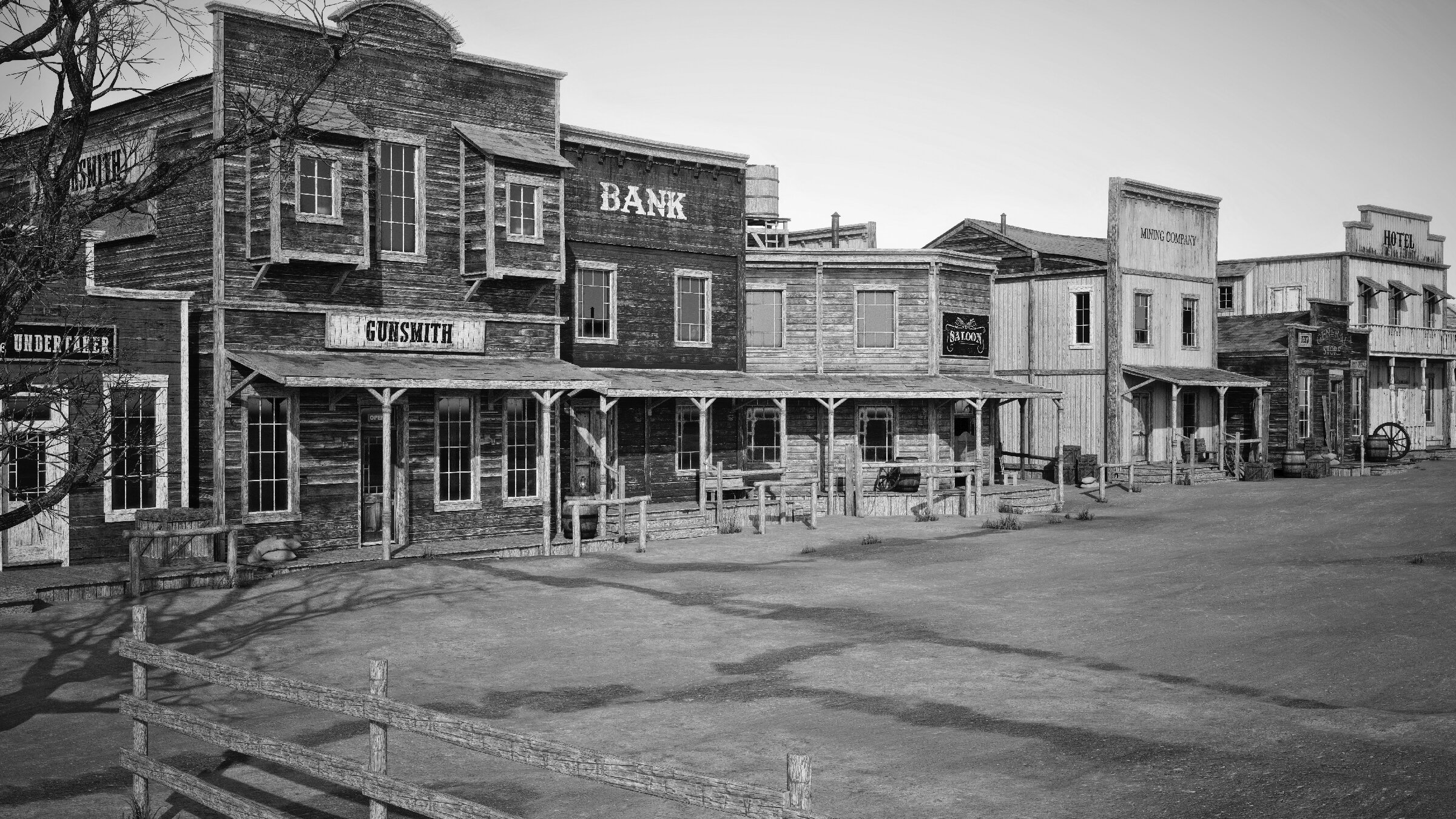
I’m in a room, waiting for my truck to get serviced.  They told me I need new front brakes and a new battery.  Funny how you go in for one thing and they find two more things that need to be fixed.  The TV is showing an old western movie, “3:10 to Yuma.”  Not the Russell Crowe version; the Glen Ford, black and white, original.   

I grew up on black and white Westerns.  We watched “Bonanza” and “The Rifleman” on a small, thirteen-inch black and white TV.  Roy Rogers always was the good guy and this actor, Ronald Regan, introduced the story of the week on “Death Valley Days.”  

We loved the gunfights.  We knew they weren’t real because guns were part of our lives.  My brother, Steve, always counted the shots of the shooters.  We knew a Colt revolver only had six shots.  The good guys and the bad guys would shoot indiscriminately, ten or twelve shots without reloading.  Hollywood was never concerned with accuracy. 

We’d also seen enough animals shot to know bullets leave holes and holes leak blood.  Not in black and white Westerns.  A man would get shot, grab his stomach, then fall.  Sometimes he would fall off his horse, or off a roof; then the camera focused on his body.  Bullets in those days must have killed without entering the body. 

In most Westerns, you knew the good guys and the bad guys.  John Wayne was always the good guy.  Good guys always wore white hats.  The bad guys were unshaven, wore black hats, and smelled bad.  We couldn’t smell through the TV, but you could tell.  Occasionally, there was a plot twist: the bad guy would turn good and stand with the other good guys.  He would shoot his former partners and then the Sheriff would give him a horse and a head-start.  We all knew the Sheriff wouldn’t chase him.  As the credits rolled, we hoped he would find a good woman, settle down, raise some cows, have some kids, and never turn to crime again.  I’m not sure it really works that way in real life. 

I do remember as a child thinking, “There sure are a lot of bad things happening on the Ponderosa.”  I lived on a ranch, just like Adam, Hoss, and Little Joe.  We never had rustlers trying to steal our cattle, or bandits who tried to break into the bank.  When we rode out to work cows, we never found a traveling snake-oil salesman or a tramp passing through.  Some of the older hands would actually carry a rifle or a pistol, but the guns were used only to kill rattlesnakes.  We never had a shootout with a gang.  Of course, our ranch was not out west; we were down south.   

About the time we got a color set, Westerns changed to color too.  Marshall Dillon was still the good guy, but we were never sure if Clint Eastwood was the good guy or the bad guy.  The shows changed: the bad guys seemed to win more often.  The good guys weren’t always good; sometimes they turned out to be the bigger crooks.  The girls seemed to like the bad guys more than the guys with white hats.  The producers and directors told us they were producing “art.”   This is real life, they said.  But pop-culture moved on.  Cop shows replaced the Westerns.  The Westerns rode off into the sunset. 

Art, they say, imitates life.  Maybe the black and white Westerns represented the way most of us saw life.  We wanted to believe people were easily divided into good guys and bad guys.  We hoped the bad guys always had to pay for their crimes and the good guys always got the girl.  Decisions are easier when everything is in black and white. 

Jesus followers know there are no “good guys” and “bad guys.”  In every one of us, there is the capacity to be very bad.  That capacity to be bad becomes reality more than any of us want to admit.  Paul wrote a great insight: “There are none that are righteous; no, not one.”  Life really is a matter of black and white, and all of us are the bad guys.   

This is the “why” of Christmas.  Jesus, fully God, fully man, came to live on this earth and die for our sins.  He opened the door for us to become one of the “good guys,” something we cannot accomplish on our own.  Unlike the sheriff, he doesn’t give us a horse and a head start.  He invites us to follow him, to learn from him, to live a Kingdom life.   

Amidst all the color of Christmas, there is still a black and white truth:  My hope is not in what I can do; it is in what Jesus has done for me.  What he has done for you?  What he has done for us all?


November 27, 2020 /Clay Smith
black and white, westerns, cowboys
Reflections

Giving Thanks in Stormy Times…

November 20, 2020 by Clay Smith in Reflections

The week after Halloween, we noticed a Christmas tree lit up through a neighbor’s window.  Then we saw another.  And another. I started counting the number of Christmas trees I saw.  I quit when I reached a dozen.  A dozen, I figure is a trend.  My neighbor down the street has already put up his outdoor Christmas lights, putting pressure on all the rest of the neighborhood. 

Thanksgiving this year will be different for so many families.  People are afraid to travel, older folks are afraid to gather, and who wants to get together with your crazy cousin who attacks you based on who you voted for? 

Maybe that is why we have gone from the sugar rush of Halloween straight to the hope of Christmas.  Thanksgiving is a speed bump this year.  There will be no audience at the Macy’s Thanksgiving Day parade and no cross-conference rivalry games.  Just today, I saw an article about people buying smaller turkeys because they will not be feeding as many people this Thanksgiving.  Makes me feel kind of sorry for all the fat turkeys.   

Many of us will be glad to see 2020 go.  We endured months of quarantine, dwindling supplies of toilet paper, masks, and separation from our loved ones.  Some families lost their loved ones.  Medical personnel, pastors, and caregivers are fatigued and burned out.  On top of the pandemic, we endured riots, debates, relentless political ads, and a yo-yo economy.  It has been a stormy year.   

In the Psalms, there are songs of lament.  These are prayers made to God in stormy times.  When you read them, what strikes you is how many include words of thanks.  How can you thank God in stormy times? 

You thank God in stormy times by refocusing.  You set aside your anxieties and look at your life from God’s perspective.  This requires being “non-me-centric” for a few minutes.  This change of view will cause you to see gifts from God you might have taken for granted. 

You realize life is a gift.  God did not have to allow you to be born.  He did not have to intervene to keep you alive.  God did not even have to design your incredible body that breathes without conscience thought and processes food into energy without your concentration.  When was the last time you thanked God for a body that functions as well as it does?   

Most of us have people in our lives that love us.  Do you think those people just came into your life by accident?  One of my closest friendships happened because I was assigned to share an office in grad school.  Accident or divine gift?  When is the last time you thanked God for the people in your life who encourage you and tell you the truth?   

Keep looking at your life from God’s perspective.  Most of you reading this column have more than you need.  Our economy emphasizes what you do not have in order to sell you more.  But consider your closet.  There have been kings in history who had fewer clothes than you have.  When was the last time you thanked God not just for what you have, but for having more than you need? 

I think sometimes about the life of my great-grandfather, who took his young wife and small children and made a wagon trip from North Florida to South Central Florida.  That trip must have taken him weeks.  I can drive it in four and a half hours.  I don’t know why God allowed me to live in a time of easy transportation and indoor plumbing, but I am grateful for both.  When was the last time you thanked God for letting you live now, instead of a different era of time? 

Especially in stormy times, God holds us.  He gives us strength.  He teaches patience.  He provides hope. Our anxieties can blind us to God’s gifts of character.  Character is formed in that part of your soul that is eternal.  When was the last time you gave thanks for God’s hand forming your soul? 

If you are a Jesus follower, there is of course the greatest gift of God.  The idea of being a “sinner” is
off-putting to people, but to accept that label is to embrace the deepest truth about our lives: we are broken people.  No one has it all together, some people just hide it better than others.  A Jesus follower chooses to believe that God, who is rich in mercy, sent his Son to earth to pay the penalty for our sins and to offer us a different life, a new birth.  When you embrace Jesus, it means your failure does not define you or determine your future; your relationship with God does.  He is not merely a benevolent being; God is your Heavenly Father.  You are adopted into his family.  No matter what storms come, nothing changes how much your Heavenly Father loves you.  When was the last time you thanked God for welcoming you into his family? 

Don’t rush past Thanksgiving.  Get perspective.  Give thanks.

November 20, 2020 /Clay Smith
giving thanks, thanksgiving
Reflections

Mornings on Horseback…

November 13, 2020 by Clay Smith in Reflections

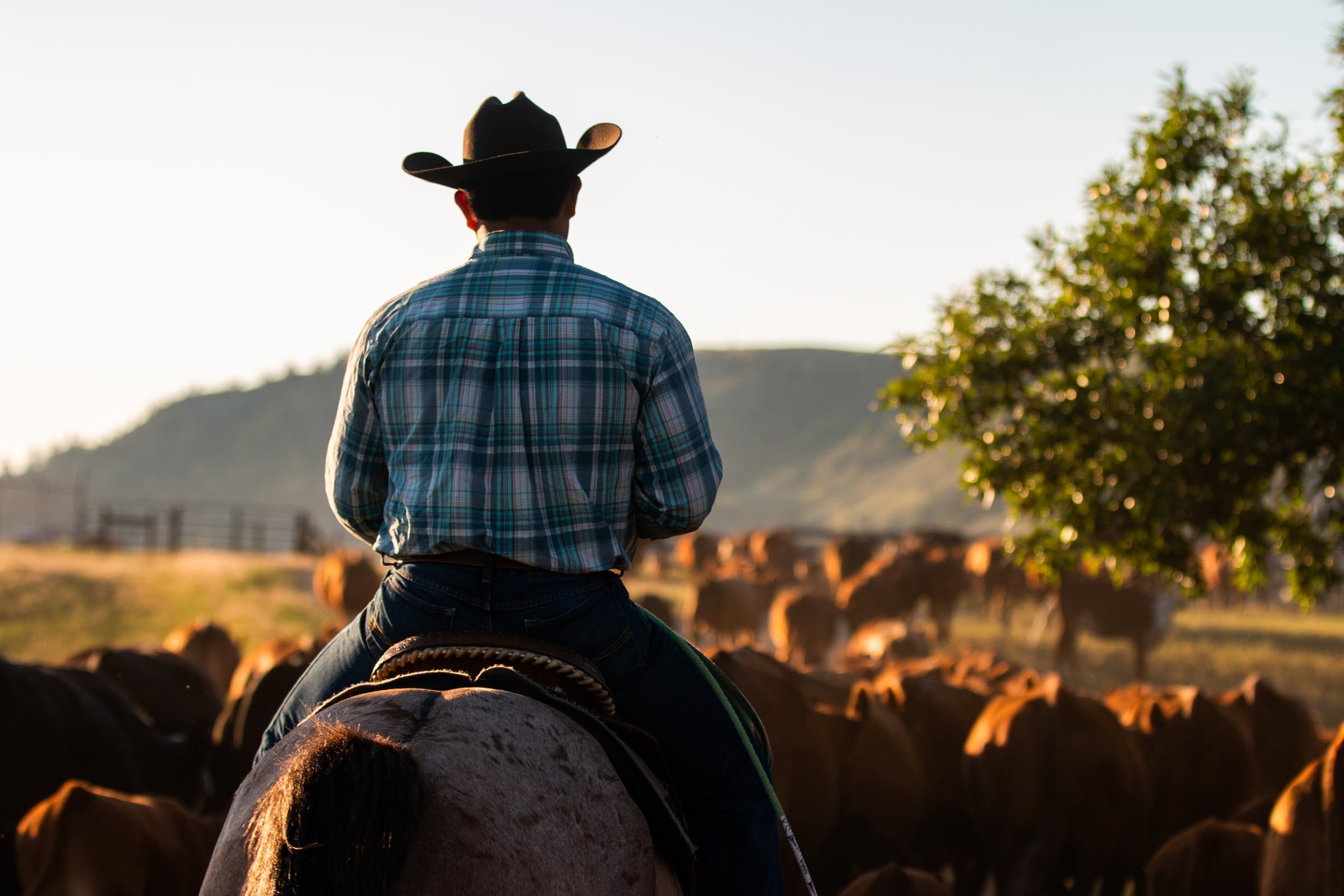
It was a long time ago but still very clear in my memory.  We were going to work cows.  Pop, my stepfather, believed in starting before dawn.  He wanted to be riding out when the first light broke.  That meant you were up early, out to the barn to saddle up, load your horse in the trailer, and ride through the early morning fog to the front gate of the pasture. 

The sun had not yet broken over the horizon, though fingers of light were pushing against the fog.  We stopped to unload the horses and mount up.  My brother Steve and I would have the long ride this morning.  We were to go to the far corner and start pushing the cows towards the pens. 

If you have never ridden a horse, you do not know the stillness of riding.  That morning I could hear the creak of the saddle-leather, the gentle dropping of the horses’ hooves on the grass, and the “bob-white” call of quail.  The cows were still a ways off, not yet seeing us, not yet disturbed in their grazing.  There was no hint of Florida’s heavy humidity and heat, just a cool dampness that seemed to rise from the ground. 

Steve went left and I went right to circle around a bunch of cows off in the Heflin block.  We would have to move them about a mile toward the pens.  One by one, the cows lifted their heads from their morning graze, eyeing us suspiciously, but not yet moving.  My horse jumped over a full drainage ditch where I saw two baby alligators in search of their morning meal.   

I had made the circle and now started to ride up behind the cattle.  They began to move in the desired direction, mooing to each other.  Calves sought the sides of their mamas, the herd slowly gathering.  An old bull stubbornly refused to move; Steve cracked his bullwhip over the bull’s back, and he got the message.  Ponderously he moved to join the herd, grunting his displeasure. 

The sun had risen by now, bringing not warmth, but the real heat of an early summer Florida day.  The cattle were moving in the right direction, headed toward the barbed-wire gap we had opened.  This was always the tricky part: keep the cattle moving without them stampeding through the fence.  They were cooperative that morning, moving through the gap. 

We had to gather them after they made their way into the other block.  A few hard-headed cows went off in the wrong direction.  I spurred my horse to outpace them, got in front of them, and then turned them back toward the herd.  The noise level had risen; every cow, it seemed, had an uneasy feeling they needed to express. 

Uncle Earl and Uncle Barney brought a bunch of cows from the north side, while Pop and Uncle Bedford brought a bunch from the south.  Steve and I started with about 150 head; now, 300 head were in one herd, needing to get across another hundred acres before we reached another gate and the trap.   

By now we had been in the saddle for a couple of hours.  The critical moment had arrived.  Faced with a closing box, the cattle were tempted to bolt and run.  You had to keep up the pressure, keep them moving in the direction you wanted.  Several times one would break out, and Steve or I would have to run them down, turn them back, and get them moving back toward the herd.   

Trickles of sweat were snaking their way down my back; my horse was lathered up.  We had run together (though he was doing most of the work) after the strays and worked our way back to keep the herd moving.  Finally, we were at the gate that led to the trap.  Three hundred cattle were trying to squeeze through a fourteen-foot gate all at once.  Once they all got through, the youngest (me), swung off his horse and closed the gate.  I remounted and then we pushed about half to the pens.  We would get the rest of them later. 

Those mornings on horseback felt so good: the quiet, the beauty, the sense of purpose.   It was the kind of work a man could take pleasure in.  The work seemed almost holy.  Maybe it was. 

In that most beloved Psalm, we are told, “The LORD is my shepherd…”  Shepherd and cowboy are not the same thing, but close.  I can picture the Lord out in the morning, pushing all the sheep he loves to the pen, chasing the strays, keeping the flock moving.  What I know for sure is this: He wants you to be in his flock, moving in his direction. 

November 13, 2020 /Clay Smith
cowboy, cows, Psalms
Reflections
world in hands-01.jpg

The Whole World in His Hands…

November 06, 2020 by Clay Smith in Reflections

Outside my window there was a group of children playing football.  There was one very tall boy, one very tall girl, a half dozen mid-size kids, and three or four pint-sized munchkins.  They had organized themselves: the two tall kids were captains and quarterbacks, the little kids were running backs and receivers, and rest were lineman and defensive backs. 

Their game was compelling.  I stopped my work to watch.  The tall-boy team was moving the ball down the field in a series of runs, picking up yardage.  Then a fumble.  Ever seen twelve children pounce on one spot?  It looked like a pack of hungry dogs who had found a bone.  One of the tall-girl team-members was at the bottom of the pile, curled up around the ball.  A turnover. 

The first play of the tall-girl team was a handoff.  A speedy girl with long black hair took off.  She made the corner and was running toward the goal.  Her teammates were running after her and the tall-boy team was in hot pursuit.  Through my window I could hear laughter and shouts as they chased the black-haired blur.  She crossed some imaginary goal line and spiked the ball. Touchdown for the tall-girl team. 

I wanted to get up, leave my desk, and get in the game, but I had a deadline to meet.  People were waiting on me.  But clearly those children were having much more fun than I was having.  There was joy in their game, laughter in their running. 

Before I returned to my computer and the ever-blinking cursor, I thought about all the things those kids were not worried about: the election, COVID19, violence, the economy, and a thousand other things that filled my thoughts.  If those children knew about those things, they did not worry about them.  My hunch was they left the weightier matters to their parents.  They were being who they were made to be: children. 

I know not every child has an idyllic childhood.  But even children in horrific environments know how to play.  It seems to be hardwired into our souls.  Our souls long to laugh and run, to feel the joy of deliciously wasted energy.   

I can’t remember the last time I ran just for the fun of it.  Come to think about it, I can’t remember the last time I ran.  It seems like most of my day is about getting things done.  Even my Sabbaths can feel hurried: “I have to hurry up and rest so I can get back to work.”  I don’t think that is what God had in mind when he said, “Six days you shall labor and the seventh you shall rest.”  Though lots of energy was being expended by the kids outside my window, I felt sure those children were Sabbathing better than I do. 

Jesus once said, “Unless you become like a little child, you cannot enter the Kingdom of heaven.”  Among other things, I think Jesus meant to really live the life God wants you to live, you have to leave things in His hands.  Sure, we care about elections and COVID, justice and the economy, but ultimate solutions are in God’s hands. Jesus’ invitation to us is to be children, loved by our Heavenly Father. 

An older, wiser follower of Jesus once told me I needed to pray until I no longer felt anxious.  That would mean I truly had left the matter in God’s hands.  God’s hands are wide enough to hold whatever you place there and strong enough to work in ways you cannot understand.   

The Apostle Paul wrote, “Be anxious for nothing, but in everything, by prayer and petition, with thanksgiving, present your requests to God.  And the peace of God, which passes all understanding, will guard your hearts and minds in Christ Jesus.”  Anxiety is always a prayer-cue.  When you present your requests to God, and leave them with him, a peace you cannot understand guards your soul, even if your prayer is not answered in the way you wish.  Our God is the adult in the relationship.  He’s got you.  He’s got me.  As the old song goes, “He’s got the whole world in His hands.”


November 06, 2020 /Clay Smith
Apostle Paul, Sabbath
Reflections
Funeral Procession-01.jpg

Two Funeral Processions…

October 30, 2020 by Clay Smith in Reflections

I drive in a lot of funeral processions.  It’s an odd part of my job.  Usually I’m placed between the funeral director’s car and the hearse.  Most of the time the processions are short: from the funeral home to the cemetery, or from the church to the cemetery.  Occasionally the cemetery is out of town and the journey is a little longer.   

Funeral processions do not move quickly, usually about thirty or forty miles an hour.  I’m not sure why.  Maybe it feels more mournful.  In most of the South, the procession is escorted by police.  If you’re driving in the South and you see a funeral procession, it’s customary to pull over.  It’s a sign of respect.  You honor a life and a family when you do. 

Last week, I was asked to officiate the funeral of a man whose family attended our church.  He did not attend, but I had met him a time or two.  The man had put in twenty-four years of active service in the Air Force and went back to work as a civilian contractor.  A motorcycle enthusiast, he was killed when his bike hit a concrete median.   

When I pulled up to the church for the service, I was amazed.  There were at least a hundred Harleys in the parking lot.  The deceased was part of a bike club that rode together and socialized together.  His biker buddies had shown up in force for the funeral.   

After the service, the bikers mounted up and a hundred Harleys roared.  The lead escort of bikes was followed by a biker with two American flags flying from the rear of the bike.  The police escorted us to the county line at the normal funeral procession speed, but once we crossed the Wateree River bridge, with the motorcycles in the lead, the pace picked up.  We were headed to the Fort Jackson National Cemetery.  As I drove behind the Harleys, I thought about the bikers.  Most of them were over forty.  You could tell some were retired, but most appeared to still be working.  They were decked out in leather and denim, and there were more tattoos than average, but they were there to honor their buddy and support his family.  They had taken off time from work or from home to be there. 

At the cemetery, the bikers dismounted, stood in quiet reverence during taps and the rifle volleys, and listened to Psalm 23.  When I said the final “Amen,” and spoke to the family, they moved forward to offer hugs, offers of help, and once again, share their own grief.   

The next day, I was headed to North Carolina to pick apples with my wife.  At Newberry, I saw an enormous fire truck, a ladder truck on an overpass.  Its ladder was extended full length and an American flag was flying from the top.  Then I remembered:  Greenville County Deputy Sherriff Conley Jumper had been killed in the line of duty.  His funeral was in Greenville, but they were burying him in Newberry.   

We drove further up the interstate and I noticed State Troopers blocking entrance ramps, so Deputy Jumper’s procession would not be interrupted.  People were standing on overpasses, waiting to salute. 

Then we saw the flashing blue lights.  Two State Troopers were in the lead.  Then some Greenville County Sheriff’s vehicles.  Then the hearse and the family limo.  Other family cars.  Then more police cars.  And more. And more.

If you’ve never been to a law enforcement funeral service, brother and sister first-responders come from all over the country to form an honor escort.  Deputy Jumper’s service was no different.  I saw cars from just about every city and county in South Carolina.  There were fire trucks and ambulances.  Not every car had a sticker, but you could tell some were from out-of-state.  The procession stretched out at least ten miles or more.   

These law enforcement officers were doing exactly what the bikers had done: they gathered to show support, to be there, to share the grief.  I think, but I’m not sure, that bikers and officers share a bond with each other.  Unless you’ve been on a bike, you can’t really understand what it’s like.  Unless you have responded to a call, siren blaring, you can’t really understand what it’s like. You have to be there.   

When God sent his son Jesus to earth, he was emphatically saying, “I do understand what it’s like.  I’ve been there. I sent my Son to earth so you would know I know what life is like.  I know grief.   I lost my Son.  But I raised him from the dead.   I do not want you to grieve as people without hope.  In the face of death, put your hope in me.” 

God has been there.  God is here.  And God will be there.

October 30, 2020 /Clay Smith
funeral, processional
Reflections
nathan-shively-q4esnb5f0rU-unsplash.jpg

Critics…

October 23, 2020 by Clay Smith

A few years ago, I was at a high school football game.  Our team, the home team, was huddled on offense. They broke the huddle and came up to the line of scrimmage.  The ball was hiked, and the quarterback rolled out to the right side of the field.  He had an open receiver and threw the ball.  It was not a great throw, but it was a catchable pass.  The defender arrived about the same time as the ball, delivering a bone-crushing hit.  The receiver briefly held the ball, then it went out of his hands and fell on the ground.  Incomplete pass.

Before the PA announcer could say, “Pass broken up by number 56,” a man behind me stood up and started yelling at the receiver: “How could you drop that ball?  It was right to you!  You got butter on your finger’s boy? My grandmother could have caught that ball!”  I turned around to look at the man.  He was about forty-five years old and about forty-five pounds overweight.  I had no idea what kind of shape his grandmother was in.

I did not know this man, but I was tempted to say to him, “Do you think you can do better?  Do you think you could hold that ball, knowing a hit is coming?  What gives you the right to criticize?” 

Since this happened early in the game, the man behind me had several other comments when players made mistakes or did not perform at an NFL level.  By the third quarter, I was thinking to myself, “If he yells at the players one more time, I will turn around and slap him in the name of Jesus.”  Then I remembered Jesus did not slap anybody.

Our team was up by a comfortable margin, so I allowed my mind to ponder everything on a sixteen-year-old’s mind.  The test he blew that morning.  The fight he had with his girlfriend last night.  The coach cutting his playing time in favor of an up-and-coming sophomore.  Overhearing his parents fight three or four days ago.  Wondering if he is good enough to play college ball.  The performance pressure of playing in front of three thousand people.  If all that were on my mind, I doubt I could focus on catching any ball.

The final horn sounded and the man behind me slapped my back and said, “We pulled out a win!”  I thought, “What do you mean ‘we?’  I did not see you down on the field.  I do not think you were calling any plays.  In fact, I heard you refer to the coaches as ‘Idiots’ several times.  All I heard was you hollering criticism.”

There are three kinds of criticism.  Constructive criticism aims for improvement.  Every boy on the field that night had signed up for constructive criticism.  The coaches of the team were watching film, correcting mistakes, doing their best to train the team to win as many games as possible.

Destructive criticism has a different purpose.  Destructive critics love to point out faults in others so they can feel better about themselves.  They love feeling powerful at the expense of others.  They do nothing to help people get better. 

If you grow up with a parent who is a destructive critic, God help you.  The voice of a destructive critic worms its way into your soul and can eat at you.  You constantly hear an internal message that you are not enough, you are only valued when you achieve, and you will never be as good as your critic.

The third kind of critic is the most toxic.  I call them “The crazy critic.”  Crazy critics pretend to be your friend one minute and tear you down the next.  The crazy critic does not just try to control your emotions, they try to manipulate your life.  I have talked to people who are married to a crazy critic.  They tell me it is a special kind of hell, living on the edge every moment.  Free dating advice for those of you who are not married: If you see signs that you are dating a crazy critic, run.

The good news is you can control your response to your critic. If a critic really has your best interest at heart, you choose how to accept and apply their counsel.  You can choose to set a boundary with a destructive critic.  You do not have to have a relationship with a crazy critic.  If you must relate to them, you can keep your guard up.

One of the many reasons to admire Jesus was his response to critics.  He refused to accept their agenda.  When they tried to trap him, he changed the agenda and put them on the spot.   Even though his critics had power and prestige, he did not let them define his mission. 

The older I get, the more empathy I have for coaches, presidents, and ballplayers.  As Teddy Roosevelt famously said, “It is not the critic who counts; not the man who points out how the strong man stumbles, or where the doer of deeds could have done them better. The credit belongs to the man who is actually in the arena, whose face is marred by dust and sweat and blood; who strives valiantly; who errs, who comes short again and again, because there is no effort without error and shortcoming; but who does actually strive to do the deeds; who knows great enthusiasms, the great devotions; who spends himself in a worthy cause; who at the best knows in the end the triumph of high achievement, and who at the worst, if he fails, at least fails while daring greatly, so that his place shall never be with those cold and timid souls who neither know victory nor defeat.”

I wonder if the man at the game ever heard of Teddy Roosevelt.

October 23, 2020 /Clay Smith
football, critics, criticism
iStock-522317349.jpg

Jesus Followers and Government…

October 16, 2020 by Clay Smith in Church and Politics

Americans are granted one of the greatest privileges in history: we choose our leaders.  No King succeeds his parent to the throne; no dictator seizes power.  I believe every American should be informed by credible sources (Note: a Facebook post is not a credible source) and should vote.  People across the world marvel at Americans who stay home during an election and then complain about who gets elected.

Jesus followers, however, have additional duties.  There are clear instructions in the New Testament about our interactions with government.  We are told in Romans 13 that we are to submit to governing authorities.  No follower of Jesus can be an anarchist.  Someone must be in charge and God allows a government to form and establish law.  Are some laws unjust?  Yes.  Martin Luther King, Jr., showed us how to respond to unjust laws: Be willing to suffer to show that a law is unjust. 

Also, in Romans 13, Paul tells Jesus followers to pay their taxes.  When was the last time you heard a sermon on that topic?  The US Tax Code is a confusing document, full of twists and turns.  Do I think Jesus followers should take every deduction possible?  Yes.  But at the end of the day, you need to pay your taxes.  I heard once of a minister who failed to pay taxes for a decade or more.  His church admonished him, and then graciously supplied him with funds to pay his taxes.  Then, a few years later, it was revealed he failed to pay them again!  That is just wrong.  Like everyone else, I wish my taxes were lower.  But I am glad they pay for law enforcement, fire protection, schools, roads, a national defense, and disaster relief.  The duty of a Jesus follower is to pay our taxes.

In another letter, Paul tells his apprentice Timothy to pray, especially for Kings and for those in authority (1 Timothy 2).  It is a simple, but powerful duty of every Jesus follower to pray for government leaders.  Pray for the President, whether you voted for him or not.  Pray for the governor.  You have no idea the complexities these people face.  Pray for the Mayor, the legislators, the members of city and county council.  What do you pray for?  Pray they would be wise.  Pray they will see dangers and prepare.  Pray for God to give them strength.  Look at the “before” and “after” pictures of Clinton, Bush, and Obama.  It is a tough job to lead a country, a state, or a city.  Pray for their marriages and their kids.  You do not have to like someone or even vote for them to pray for them.

A final warning given to Jesus followers is found in Revelation 13.  Contrary to popular opinion, Revelation is not just about the end of time; it is about Jesus.  When you read chapter 13, you do not have to read Greek to understand it is a warning against worshipping the state.  This was the world of the New Testament.  The Caesars thought themselves not just to be Kings, but gods.  They demanded worship.

When a government demands worship, it asks for first place in your heart.  Every decision you make is to be approved by what you worship.  Governments that do this are called totalitarian regimes (think North Korea). 

This is where Jesus followers are called to disobey.  If a government demands worship, we dare not set it up as the ultimate authority in our lives.  The first commandment given to the people of God is: “You shall have no other gods before me.”  Jesus put it this way, “Seek first the Kingdom of God and his righteousness, and all these things will be added to you as well.” 

Years ago, Vacation Bible Schools would open with a pledge to the American Flag, a pledge to the Christian Flag, and a pledge to the Bible.  As we were planning VBS one year, something made me uncomfortable about that order.  I prayed through that discomfort and began to realize we were subtly teaching our children that country comes before God.  I went to the woman in charge of VBS and told her I wanted to change the order; we would pledge allegiance to the Christian Flag first, the American Flag second.  She responded, “That’s not the way it’s written in the book.”  I tried to reason with her, and she finally gave in (rolling her eyes, and muttering something about crazy young preachers).  When the last night of VBS came, all the parents were invited to join us.  We followed our new pattern: Pledge to the Christian Flag first, the American Flag second. 

After the program, as everyone adjourned to the Fellowship hall for sugar cookies and Kool-Aid, a WW II vet stopped me and protested the order of the pledges.  I listened respectfully.  After all, this man had risked his life in combat for his country.  Then, gently as I could, I asked what the first commandment was.  He paused, and correctly answered, “You shall have no other gods before me.”  I said, “That’s why we pledge allegiance to the Christian Flag first.”  To his credit, he thought, and then said, “Preacher, you’re right.  I love my country, but I love my Jesus more.”

This is the final duty of every Jesus follower: Love your Savior first, love your country second.

October 16, 2020 /Clay Smith
allegiance, worship
Church and Politics

Grandfather…

October 09, 2020 by Clay Smith in Reflections

Grandpa Smith died twenty-two years before I was born.  I only ever heard stories and saw a few pictures.  He was a rancher, a citrus man, and a country preacher.  He did well for a period of time.  In addition to the ranch, he owned a packing house, a house in Tampa, I believe, and traded cattle back and forth.  But he made the mistake of trusting a man he knew well in a cattle-deal, and took the man’s word for the number of cattle he was buying.  Turned out they were running the same cattle by two or three times.  Then came the Great Depression.  If you think these are hard times, they are nothing compared to the misery of no one wanting to buy your cattle or oranges and having to borrow on your son-in-law’s life insurance policy to pay taxes. 

Grandpa Smith was a diabetic before synthetic insulin.  He was supposed to watch his diet, but he didn’t.  Decades after his death, I spoke with Mrs. Anna Cowart, who nursed him when he got bad.  She told me he would empty the sugar bowl in his coffee, stir it, and then spoon up the coffee/sugar mix (Hey Starbucks, I have an idea for you).  Diabetes and heart disease killed him at sixty-one.

Grandpa Clemons, my mother’s father, was a character – and that’s putting it mildly.  Granted, his early years were hard.  He was “turned out” at age 9 and told to go make his way in the world.  He started as a cook on a dredge in the Kissimmee River.  He not only had to cook the food and clean up after meals, he had to go ashore and kill a deer or a turkey for supper. 

He took a job with Irlo Bronson and took most of his pay in cattle.  At the height of the depression, he somehow secured a thousand-dollar bill.  He’d go to a country store, buy groceries, and then try to pay with that thousand-dollar bill.  Of course, the store wouldn’t have nearly that amount of change in the drawer.  The owner would usually extend him credit.  Grandpa would start running a tab.  When the tab got close to that thousand-dollar mark, he shifted to another store, and started the process over.  Believe me, I know that’s not right, but he got a lot groceries out of that thousand-dollar bill.

Grandpa Clemons was known to disappear from home for months at a stretch.  Sometimes he was off trading cattle or horses in Texas; or organizing and promoting a rodeo; or competing in a rodeo; or just off somewhere doing who knows what. 

He bought the Okeechobee Livestock Market with a partner and set my Uncle Pete to run it.  Somehow, he got started in earthmoving and had a construction company.  With a third-grade education he did all the estimating for how much dirt would have to be moved and how long it would take.  In his own way, he was a genius.  He started with nothing and ended up a wealthy man.

I spent a few days with him growing up, but he was not the kind of grandfather who got on the floor to play with you or take you to Disney world.  He once promised me a waterfront lot in Buckhead Ridge when I got married, but apparently, like a lot of his promises, he forgot that one. 

I became a grandfather recently.  My son and his wife have a new-born son, Shephard Alexander Smith.  Because of COVID, I haven’t seen or held him yet, but I will soon.  Already I want to reach through the phone and snuggle him.

I’ve been a father for about 30 years now.  The jump to being a father-in-law wasn’t that far.  Being a grandfather is a whole new role.  I’ve tried to learn from other grandfathers in the past years about what I’m supposed to do. 

As I understand it, Grandfathers are supposed to spoil their grandchildren, delight in them, do their best to secure their future, build them playhouses, be there for ballgames and dance recitals, offer wise advice, and pinch hit so parents can get some rest.  I think I am up for the job.

It strikes me that though we think of God as our Heavenly Father, there are ways in which he is like a Grandfather.  Our Heavenly Father spoils us with grace.  He delights in us, in our joys, successes, when we get things right.  Our Father has secured our future by offering Jesus as payment for our sins.  He is building us a heavenly home.  Through the Holy Spirit, our Father is there for us, at ballgames, dance recitals, births, weddings, divorces, heartbreaks, and every up and down life brings.   He gives us wise counsel in His word.  When we are exhausted, he is there to give us rest, all of us who are weary and heavy laden. 

Maybe I have a pretty good model for being a grandfather after all.


October 09, 2020 /Clay Smith
grandfather, heavenly father, role model
Reflections
war tank

Finest Hour…

October 02, 2020 by Clay Smith in Church and Current Events

It was May 1940.  All was quiet on the battle line between Germany and France.  Standing toe to toe were the army divisions of Hitler’s Third Reich against the combined armies of Britain and France.  The French felt secure behind the Maginot Line, a line of defensive fortifications built after World War I.  They correctly anticipated another war with Germany would come.  They erred in thinking it would be a repeat of the battles of World War I – long sieges of trench warfare.

On May 10th, Hitler broke the stalemate and invaded The Netherlands and Belgium, neutral countries.  The French had not extended the Maginot Line up across those borders.  The German Army flanked the French and the British and drove toward Paris.  Neville Chamberlain, the British Prime Minister stepped down and a new prime minister, Winston Churchill took his place.

The British Expeditionary Force, some 338,000 men, were trapped against the sea near a town called Dunkirk.  While the French Army fought a rear-guard action, the British Army evacuated across the English Channel, carried by a makeshift fleet of naval vessels, commercial ships, and private boats.  But their tanks, artillery, guns, and thousands of other items that equip an army to fight lay in fields around Dunkirk.

Paris fell on June 14th.  By June 18th, the French began to negotiate terms of surrender with the Germans.  Britain now stood alone against the Nazis.

It appeared the situation was hopeless.  The British had an army, but no weapons.  Their air force was numerically inferior to the Luftwaffe.  Their greatest asset, their fleet, was ill-equipped to fight in the narrow waters of the Channel.  It seemed a matter of time before Hitler crossed the channel and invaded England.  Hitler believed, having driven the British Army from the European continent, it would never return.

On the same day France began to negotiate surrender, June 18th, Winston Churchill made a speech, first to Parliament, then on the BBC to the British people.  He did not paint a rosy picture.  He confessed the hour was dark, the times were challenging.  He acknowledged that he did not exactly know how victory would be achieved.  In spite of the uncertainty, he called the British people to stand courageously against the evil represented by Nazi Germany. 

He concluded one of the greatest speeches of our time with these stirring words:  “Let us therefore brace ourselves to our duties and so bear ourselves that if the British Empire and its Commonwealth last for a thousand years, men will still say, “This was our Finest Hour.”

This year, 2020, has been filled with crisis.  First, COVID19.  Then the troubles of the economy.  Politics this year seems to bring out the worst in people, not their best.  People are stressed, emotions are running high.

I’m not sure why, but it seems many people I know have suffered a tragedy this year: a friend’s house burns; siblings with cancer; a niece dies tragically; a brain tumor is found.  These things always happen, but it seems this year they are heavier, occupying more space in our souls.

Our temptation is to retreat, to be self-occupied.  We crave a sense of safety.  We checkout so we will not feel our fears and anxieties. 

I find myself longing for a voice to call to us all, urging us to be courageous.  What if God did not mean 2020 to be a year of discouragement and defeat, but a year when we are courageous?  Could it be that we should brace ourselves to our duties, loving our neighbor as ourselves, loving our enemies, serving, and caring for the least of these?  Could it be that 2020 is to be a year we bear up, asking God for strength to carry on, asking God for wisdom to know what to do, asking God for a deep peace that calms our anxieties?

What if God was calling to each of us, saying, “I want you to make 2020 your finest hour.”  Would it change what you post on Social Media?  Would you seek to understand before you speak?  Would you be less concerned about your rights and more concerned with what is just and fair for all?

Maybe the voice I long for does not belong to Winston Churchill.  Maybe it belongs to God. Maybe it is his voice crying to our souls to live above defeat and discouragement.  Could it be God is challenging you to make this year your finest hour?

In a thousand years (if, as preachers say, the Lord tarries), what will our descendants say about 2020?  Will they say, “This was their finest hour.”

October 02, 2020 /Clay Smith
2020, winston churchill, finest hour
Church and Current Events

Aunt Bill…

September 25, 2020 by Clay Smith in Reflections

Most people looked surprised when I told them I about my Aunt Bill.  She was named Billie Jean, but everyone, from her mother to her friends called her Bill. 

Aunt Bill was my mother’s only sister.  She shared with my mother and two brothers a life on central Florida ranches as my grandfather moved from ranch-hand to ranch owner.  Grandpa believe his children were free labor.  If the intake pipe on the pump was clogged, he would tell them to unclog it.  Their solution: Tie a rope around the youngest brother’s waist and tie a concrete block to his feet.  Then they would throw him in, he would sink, pull out of the pipe what he could, and then yank the rope.  Sometimes, Sissie, Pete, and Bill would even remember to pull him up.  Aunt Bill always said if it wasn’t for her, Bud would never have survived to adulthood.

She married Uncle Larry, a friend of her brother.  Larry was a vet, just starting out.  Two kids came along: Terry Lynn and Bob.  This is when she came into my memory.  We would go to Aunt Bill’s house every Easter.  Being the youngest, I was at a distinct disadvantage in the egg hunt.  Aunt Bill would make sure every child got some eggs and would hide some especially for me to find.   Sometimes Mama would leave me at Aunt Bill’s for a few days (every Mom needs a break).  Being with Aunt Bill was fun.  She would let you play throughout the house, roam around the barn, even play in the boat.  I remember piloting that boat through storm after storm as it sat on its trailer under the barn on a sunny day.  Imagination is powerful thing.  When I came in from playing, she took time to enter my world and ask, “How rough was the water?”  I would spin tales of narrow escapes, sea monsters, and alligators.  Then she would give me a slice of cake to fortify me for my next adventure.

After my Father died, Aunt Bill was beyond kind to my mother and to us kids.  If she went to the beach, we were invited.  If she was staying a week at the lake, we came along.  When she wanted her kids to see the mountains, we joined the trip.  You haven’t lived until you ride in the rear-facing backseat of an Oldsmobile Vista Cruiser station-wagon through the Great Smoky Mountains.  Mama would have never taken that trip by herself.  Aunt Bill opened the doors to a bigger world.

Tragedy struck her life.  Uncle Larry was killed by a drunk driver.  She went from the comfortable life as the vet’s wife to needing to make a living for her family.  She took his seat on the school board, learned to be a realtor, and began to rebuild her life.  Her mother, my grandmother, used to say, “Life will make you bitter or better.”  Aunt Bill strove for better.

She married again and took a new family under her wing.  It was not easy.  Aunt Bill was determined (stubborn?) to make it work. 

In one of those God-ironies God likes to sprinkle on our lives, Aunt Bill decided to follow Jesus during a revival at the Methodist Church in Venus (Venus, Florida, look it up).  Granny, Mama, and Uncle Pete all made their decisions for Jesus during the same revival.  They were baptized by the Baptist preacher a few days later in one of the nearby lakes.  The irony is this: the Baptist church in Venus was founded by my father’s father.  He had already passed away, but his future daughter-in-law, and my father’s future mother, brother, and sister-in-law became members of the church he began.

Aunt Bill had the kind of faith that believed God was at work in all things.  She loved Jesus, served his church, and did good.  If more people lived their faith like Aunt Bill, there would be a lot less meanness in the world.

There was a time in my life when I needed encouragement and support.  I was a young adult, prone to mistakes (what young adult isn’t?).  There were things going on and I needed the encouragement and guidance of someone who was not my mother.  I’ll never forget her calling me.  I don’t know how she knew what was going on, but she listened, supported, and did not judge.  She did what good aunts and uncles do – she was there.

Aunt Bill died last week.  She was 91 and had lived a good, long life.  She navigated the real storms of life and her faith saw her through.  Because of COVID, timing, and distance, I was not able to go to her funeral. 

I find myself very sad.  I’m not really sad for Aunt Bill.  She is with our Heavenly Father.  The decision to follow Jesus in Venus some eighty years ago held her safe through death into eternity.  I’m sad for me.  I feel another piece of childhood has gone.  One more storehouse of memories and stories has left.  A wise friend of mine once asked, “What will I do when there is no one left who remembers my childhood?”

I was planning to go by and visit Aunt Bill this past March.  COVID came.  The trip didn’t seem wise.  I really regret not making that trip.  I would like to hear Aunt Bill tell a story and laugh one more time.

September 25, 2020 /Clay Smith
Aunt Bill, Memories
Reflections

The Stars are Telling You Something…

September 18, 2020 by Clay Smith in Faith Living

Days on the ranch started early.  First you put on your britches, then you went to the barn to feed up.  Then you ate breakfast.  Back then, my parents didn’t see the need for a security lamp.  It didn’t matter how dark it was, the barn hadn’t moved in a hundred years.  You were expected to navigate your way in the darkness before the dawn.  I would start the hundred-yard journey, stepping into the darkness, letting the shadows and moonlight take me down the path.

On the clear pre-dawn mornings, I remember the stars.  We were far from the light clutter of town, so you could see the light dust of the Milky Way.  The Little Dipper was open to receive and the Big Dipper was upside down.  The faint North Star, Polaris, stood as always to say, “The house is north, the barn is south.”

Some mornings I would stop, and look, and be awed.  Words can’t describe what I felt.  It was an odd combination of feeling small, of being amazed, and of worshiping the God who put it all in place and keeps it spinning.

There were other moments when the stars spoke to me: riding in the back of truck across the Mexican desert, hundreds of miles from any man-made lights.  I remember feeling very small.  I was a foreigner in a strange land.   If something happened to the truck and our driver, I would have only the stars to guide me home.  Somehow it was comforting to know that the God who knows the name of every star, knew where I was.  He would take care of me, just as he kept all the details of those stars in his mind.    

There was another ride in the back of pickup, on a different continent, in a different hemisphere.  We were driving through the Kalahari Desert on a moonless night.  The constellations were strange to me, in the wrong places.  A strange thought crossed my mind: I was probably the only person in the whole country of Botswana that had a Ph.D. in the Old Testament.  That thought did not make me feel superior.  I remember feeling humbled.  God made me a unique soul, treasured by him.  Just as God made each star unique, I was unique out of the billions of people on the planet. 

Right now, the first star I see in the evening isn’t even a star; it’s a planet, Venus, rising in the early evening sky.  Sometimes I wonder if God made all the planets in our solar system just to convey to us that earth is special and needs our care.

The stars still preach sermons to me:  Life doesn’t just happen.  There is a Creator.  He has made a beautiful creation.  Creation is a testimony to His love, His care, and His generosity.  The Creator shares his creation with me.  Whatever problems I have can be solved by this gracious Creator.

In the Bible a man named Abraham was given a promise:  he and his wife would have a child.  He waited.  No baby.  Years passed.  One day God came and spoke to Abraham: “The promise is still in effect.  I will bless you.” 

Abraham replied, “What good will that do me?  When I die, one of the hired men will get it all.”

You can understand Abraham’s response.  Waiting is hard.  Believing while you wait is harder.

So, God invites Abraham to step outside.  Not to fight.  But to look up.  To see the stars.  What do you think God was trying to say?  God told Abraham, “Look at the stars.  As they are, so your descendants will be.” I think God was telling Abraham, “If I can do that, I can certainly make your descendants more numerous than the stars.

Wait for a cloudless night.  Drive out of town, past the streetlights.  Pull over, turn off your car lights.  Let your eyes adjust to the darkness.  Look at the stars.  Think about what God is saying to you.  Maybe He is saying, “If I can do this, what do you think I can do for you?”

September 18, 2020 /Clay Smith
Creator, Creation, creator of the stars
Faith Living
Growing-01.jpg

Is Your Character Growing?

September 11, 2020 by Clay Smith in Faith Living

From the Archives.

Your mind is amazing.  It thinks so fast you don’t know you are thinking.

Like right now. 

Your eyes receive light patterns.  The patterns are sent to the brain.  The brain recognizes the patterns as words.  You don’t read the individual letters.  You don’t sound out the word.  Your brain translates the sentences into meaning without you thinking about thinking.  At the end of this article, without thinking, your brain will send a message to read what’s next.

Every day you take a thousand actions without thinking.  You make a choice and take action changing your future without thinking.   You act on what you believe is good and what is bad without thinking.   You justify to yourself your behavior without thinking.

Character is the way you structure your world.  Your inside world shows up in your external behavior.  It shows up without thinking.

We do not slow down life enough to think about our thinking.  We should.  Slow down and think about you.

Your soul is the operating system of your life.  Your character is how you program your soul.  It is the system architecture.  Your character is the patterns that come from your soul.

People structure their soul differently:  People can’t stand the tension of an open ended problem.  They must decide, even if it is the wrong decision.  Their heart is in the driver’s seat.

People feel sad and sadness guides their decisions.  Or, people think someone is a bad person and they withdraw from a relationship.  Their mind is in the driver’s seat.

People have an appetite for sugar.  They eat a box of Pop-Tarts.  They repeat the pattern the next day.  Their body is in the driver’s seat.

People want a “significant other.”  They take “the first available.”  They endure neglect, abuse, and unfaithfulness.  Their relational need is in the driver’s seat.

What if you could restructure your character?  What if you could restructure your system architecture?  What if you could restructure your soul programming?  Where would you start?  What pattern would you choose? 

What if you started with the model of the happiest person who ever lived?

Jesus.

Your objection:  I’m not sure Jesus was the happiest person ever.  Wasn’t he killed?

Yes.  So?

Your response:  That doesn’t sound very happy to me.

That’s the problem.  We define happiness by what happens in a moment.  God defines happiness by what happens from birth to infinity.

We don’t know how to define happiness.  Jesus did:  Happiness is being blessed.  Happiness is life fully lived.  Happiness is satisfaction.  Happiness is being the being God made you to be.

That is exactly who Jesus was.  This is exactly who Jesus is.

The more your character is like Jesus’, the happier you will be.  Maybe it’s time for you to slow down, think about your life, and pray to grow a character like Jesus.

September 11, 2020 /Clay Smith
character, soul, growing
Faith Living
  • Newer
  • Older


Powered by Squarespace